During his third summer at Texas Biomed, Valero Bridging Intern Kevin Rodriguez worked with Staff Scientist Aaryn Mustoe, Ph.D., to investigate biomarkers for leaky gut syndrome, inflammation, aging and cardiovascular disease.
Education has been a central part of Texas Biomed’s mission from the very beginning.
Tom Slick Jr. founded The Foundation for Applied Research, the organization that is now Texas Biomed, with the mission to provide “fundamental research and advanced education” in agricultural research, the natural sciences and medicine. Today, education remains an important focus for the Institute, with robust programs for students from kindergarten through graduate school and beyond. We call it cradle to career STEM education.
“Education and training are key to building a successful bioscience hub in San Antonio,” said Larry Schlesinger, M.D., Texas Biomed President/CEO. “Investing in the next generation of scientific innovators and leaders in our community means we are strengthening our local workforce pipeline, which fuels the growth of our city’s knowledge-based economy.”
Texas Biomed’s education and outreach programs continue to flourish. They impact more than 16,000 K-12 students in the greater San Antonio region each year. These range from school visits, campus tours and community events to the Science Education Partnership Award (SEPA), which is a training program for teachers supported by the National Institutes of Health (NIH), and the Valero Young Scientist Program at Texas Biomed for rising high school juniors and seniors. The Institute’s experienced team of educators is supported by enthusiastic employees sharing their passion for science with students and the public.
At the undergraduate and graduate level, Texas Biomed and Southwest National Primate Research Center host summer internships for college students, providing unique hands-on experience in labs, veterinary care and research administration. The Institute also offers fellowships for recent college graduates through the American Cancer Society and ongoing training for early career researchers, including through the NIH-supported Interdisciplinary NexGen TB Research Advancement Center (IN-TRAC).
The true impact of these programs is best captured through the first-hand experiences of the young people embarking on their careers, four of which we have spotlighted here.
Paving the way to an Ivy League education
Valero Bridging Intern Kevin Rodriguez was drawn to biomedical science because it offers the opportunity to solve problems and bring about innovation to help people live healthier lives.
“At its foundation, medicine relies on research – all innovations in medicine have been driven by research,” Rodriguez said. “I also really want to be able to make that connection between the research itself and patients and seeing their outcomes.”
The first-generation San Antonian will begin studying neuroscience and biochemistry at the University of Pennsylvania this fall on a full-ride scholarship. Rodriguez credits his experiences with the Valero Young Scientist Program at Texas Biomed over the past three years for helping pave the way to an Ivy League education.
“I really do think that this program was a huge part of my steps into that university,” he said
The summer before his junior year in high school, Rodriguez was part of the very first cohort of Valero Young Scientists, enjoying the opportunity to conduct experiments that mirror those at Texas Biomed over four weeks. He found the labs very different from those in high school science class – there was no predefined result, and there was more freedom to work as a team, make mistakes and learn from them.
“It helped me realize science is a much more collaborative effort than what I originally thought,” he said.
Rodriguez returned the next summer as an assistant lab manager, setting up equipment and materials for the new group of young scientists, and helping answer their questions.
After graduating from Southwest High School in May, Rodriguez spent this summer as a Valero Bridging Intern, working with Staff Scientist Aaryn Mustoe, Ph.D., in Texas Biomed’s research labs. He is helping investigate two biomarkers for leaky gut syndrome, a condition where material, bacteria and toxins from the intestine leak into the bloodstream, to see how the biomarkers correlate with aging, inflammation and cardiovascular disease.
“It’s really cool that I get to be part of this awesome project as just a high school graduate,” he said. “There’s more pressure to do things correctly because these are real samples and kits that are expensive. But it’s also more purpose-driven – obtaining data to move science forward.”
“I can’t even believe I’m here right now”
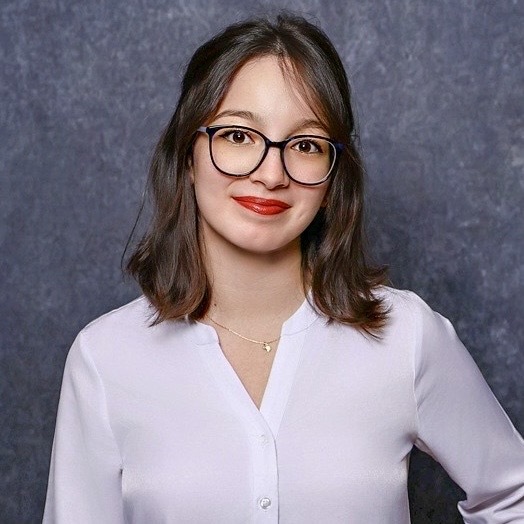
Growing up down the street from Texas Biomed, Reina Saldivar thought of the Institute as the “cool place where they do Ebola research.” She had long had a fascination with viruses and microbes – her favorite TV show as a kid was about how parasites infect humans – and regularly attended science summer camps. “I always wanted to work at Texas Biomed one day but thought ‘That is probably way too far out of my reach,’” she said.
After graduating with a degree in microbiology and immunology from The University of Texas at San Antonio in 2025, Saldivar received one of two American Cancer Society Post-Baccalaureate fellowships at Texas Biomed, which are specifically designed for recent college graduates to gain more cancer-related research experience before pursuing a doctoral degree in any science, medicine or health discipline.
“I didn’t know I could get into this research at this level,” she said. “I can’t even believe I am here right now.”
Saldivar is spending two years in Assistant Professor Tori Baxter, D.V.M. Ph.D.’s lab developing a refined mouse model for studying breast cancer. She will examine how lab mice that have been carefully exposed to different pathogens to help mature their immune systems – endearingly referred to as “dirty mice” – respond to breast cancer cells. Specifically, she will compare tumor growth and immune responses in the dirty mice and in standard “pathogen-free” lab mice, which have not encountered serious infection and have immune systems closer to a newborn human.
“We are interested in seeing if the dirty mice with more mature immune systems are better at combating the tumor and potentially serve as an improved model for studying future cancer therapies,” Saldivar said.
The fellowship is helping build her skills as a researcher, from lab work and writing papers, to networking and scientific outreach. The experience has confirmed her desire to pursue a Ph.D. in science, though she is still exploring the many career paths that she could take.
“It’s been so helpful to talk to different kinds of people and see how their science journey came about and where they want to go,” she said. “It’s so inspiring and motivating, and nice to know that I’m not the only science nerd in the world.”
New city, new science, new goals
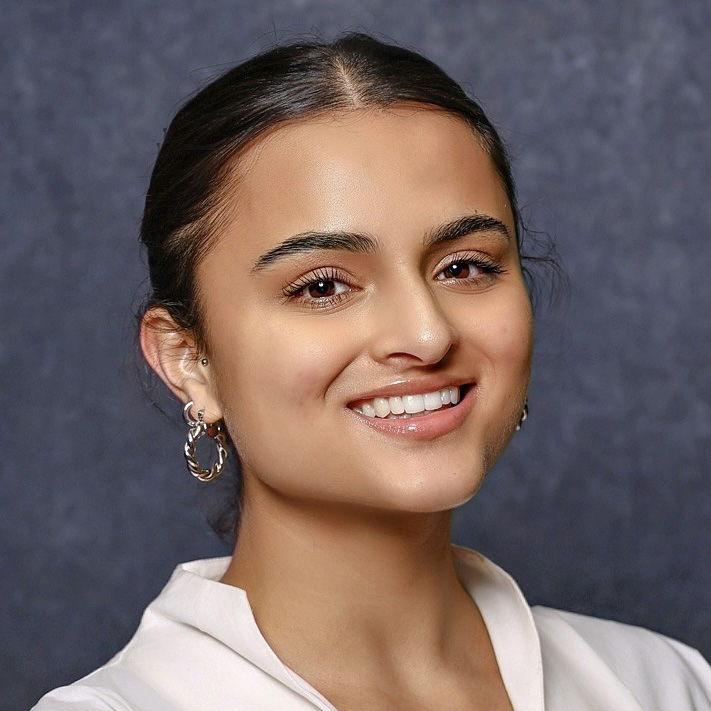
Before joining Texas Biomed as an American Cancer Society Fellow, Zaina Chagani had very little hands-on research experience beyond studying chemistry and conducting computational drug-development research at Agnes Scott College in Atlanta, Georgia. She was pleasantly surprised that despite lacking formal expertise in biology or immunology, she was selected for one of two ACS Post-Baccalaureate fellowships at Texas Biomed in 2025.
“I really appreciate that this program gives you a chance to learn and grow,” she said. “Not many research fellowships are like that.”
Chagani is working in Professor Larry Schlesinger’s lab with Staff Scientist and Lab Director Eusondia Arnett, Ph.D., studying host-directed therapies that could be effective against both cancer and tuberculosis (TB). Specifically, she is investigating a family of nuclear receptors that may play a role in promoting or inhibiting the critical process of cell death, called apoptosis. She is working to understand the mechanisms behind how these receptors control cell death pathways that influence TB bacteria growth and progression, and explore if those mechanisms are also at play in blood-based cancers such as leukemia and lymphoma.
One year into the two-year program, Chagani describes the fellowship as a “canon event.”
“Before I came here, I had completely different goals and ideas of where I wanted to go in life,” she said. “I wanted to focus on drug development research and work in the pharmaceutical industry. This experience has taught me about the freedom and independence of academic research.”
Working across multiple disciplines, including microbiology and immunology, has helped Chagani become a more well-rounded scientist. Moving to a new city has pushed her out of her comfort zone, helping her grow as an individual outside the lab. While she continues to explore her career interests, the opportunity to train at Texas Biomed has significantly expanded her horizons and her confidence.
“The community here helped me realize my potential as a scientist and how much more I could do,” she said.
Intern to employee in record time
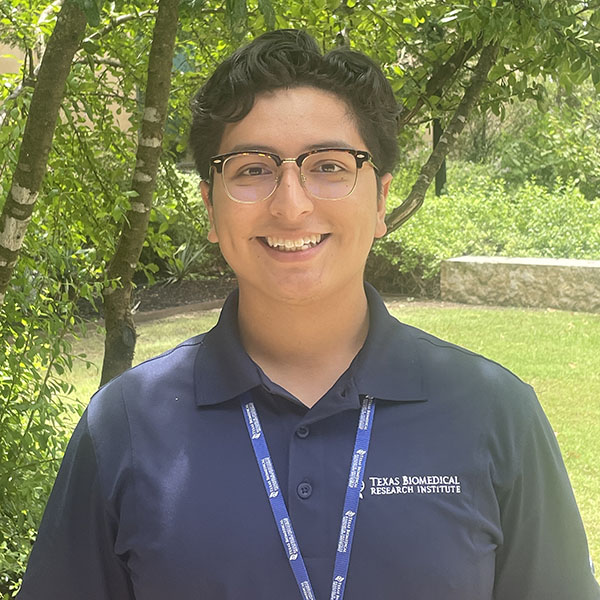
Salvador Torres is on a mission to accomplish as much as he can as fast as he can – but it’s not for himself. “It’s my way of paying my parents back. They came here with nothing, and I want to show them their sacrifice was worth it,” he said.
Torres, a first-generation San Antonian, began working on his associates degree while in high school, and graduated with a bachelor’s degree in criminal justice from The University of Texas at San Antonio in 2025 at the age of 20. In 2024, he interned with Texas Biomed’s Security and Emergency Operations Center (SEOC) as part of Texas Biomed’s summer internship program. During the two-month program, he impressed his supervisors with his dedicated work ethic, eye for safety and willingness to learn. While most internships don’t lead to a full-time job, he was encouraged to apply for an open temporary position and soon after as a full-time Security Operations Specialist.
Torres was drawn to the law enforcement field because he saw it as a rewarding career of service, helping people when they are in need. Interning and working with Texas Biomed has taught him a great deal about security in the private sector – a path he hadn’t considered before – and enabled him to learn from Director of Security and Emergency Preparedness Mark Hammargren and SEOC Supervisor Matt Peay, who both bring decades of experience to the Institute. After helping keep watch over Texas Biomed from 4 p.m. to midnight, Torres spends his day studying for his master’s degree in business administration, which he anticipates will help grow his management skills. “I’d like to one day be able to lead like Mark and Matt,” he said.