From executive leaders to new professors, get to know these four powerhouses who have joined our leadership and faculty ranks throughout the past year.
Lee-Ann Allen appointed Executive Vice President of Research
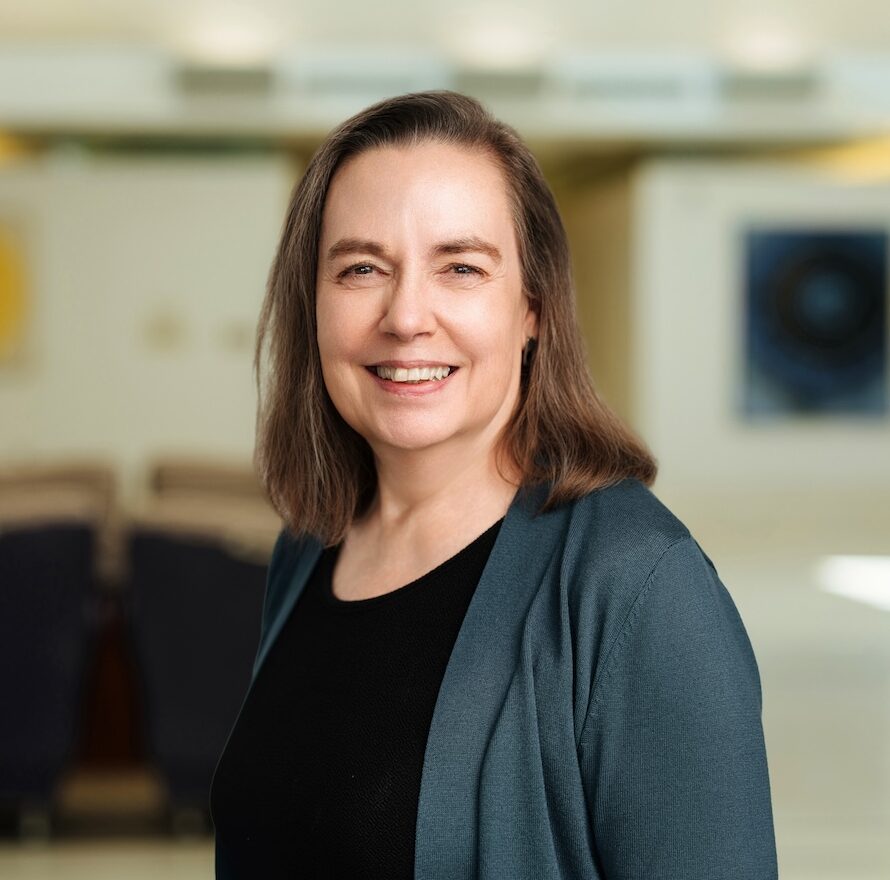
Executive Vice President, Research
Internationally recognized scientist, Lee-Ann Allen, Ph.D., has been appointed as Professor and Executive Vice President of Research at Texas Biomed. Dr. Allen will lead faculty and research at the Institute and her research experience will significantly add to Texas Biomed’s work on infectious disease, inflammation and immunity.
Dr. Allen’s research focuses on immune system cells and how their function is altered by bacteria in the stomach that cause peptic ulcers and gastric cancer, conditions that impact millions of Americans each year.
Dr. Allen comes to the Institute from the University of Missouri School of Medicine, where she served as Professor and Chair of the Department of Molecular Microbiology and Immunology and the George Trimble Endowed Chair for Excellence in Medicine.
She has been recognized for her major leadership contributions in national organizations, including the American Association of Immunologists and the Federation of American Societies for Experimental Biology. She is past President of the Society for Leukocyte Biology and a Fellow of both the American Association for the Advancement of Science (AAAS) and the American Academy of Microbiology. Dr. Allen holds a Ph.D. in biochemistry from the University of Wisconsin-Madison.
Dr. Allen said the dynamic record of innovation was a major factor that drew her to Texas Biomed.
“Joining this prestigious Institute is an honor and I’m excited to engage with faculty members who are recognized worldwide for their contributions to research,” she said.
Q: How did you get started…and what keeps you motivated?
A: I started college liking science and intending to become a physician, but along the way questioned my interest in patient care. I changed my major to biochemistry and began an undergraduate research project that changed my career path, as research had not previously been something I knew anything about or considered as a career. Curiosity keeps me motivated.
Texas Biomed names enterprising leader, Sara Wise, Vice President of Development

Following a national search, Sara Wise has joined Texas Biomed as Vice President of Development to broaden support for the Institute’s lifesaving research and innovation.
Previously based in Houston, Wise most recently served as Executive Consultant with the statewide firm Mission Advancement, which advises organizations on strategies for high-impact donor engagement and relationship-based philanthropy. Some of her clients have included the San Antonio Zoo, Wheaton Academy, Dallas Baptist University, Susan G. Komen – Houston and the Houston Area Parkinson’s Society. She also served as a director at the American Red Cross’ Greater Houston Chapter and the Houston Zoo.
Wise is working with the Institute’s Board of Trustees and senior leaders to expand support for increased research and applied science capacity, in addition to helping fund new buildings, labs and infrastructure at the Institute’s 200-acre campus.
She praised the Board of Trustees as being comprised of some of “the most high-profile and committed leaders” she has encountered.
Q: What are you passionate about?
A: I am passionate about the power of philanthropy and matching donors’ interests with our mission’s greatest needs. People are truly fascinating! I love having the opportunity to learn from and interact with the diverse array of people who fuel our science.
Greg Ippolito joins Texas Biomed from the University of Texas at Austin

Greg Ippolito, Ph.D., has made the move to Texas Biomed, joining the Institute as Associate Professor after 13 years at the University of Texas at Austin. Dr. Ippolito brings his passion for both fundamental and applied research to Texas Biomed. His lab expands the Institute’s expertise and capabilities in developing new diagnostics, therapies and vaccines for industry and government partners.
While continuing his own research program, which encompasses SARS-CoV-2 as well as influenza, dengue and malaria, Dr. Ippolito is looking forward to helping partners test their vaccines and treatments as part of Texas Biomed’s Applied Science and Innovation unit.
Dr. Ippolito and his collaborators have optimized a protocol, named Ig-seq, that can identify tens of thousands of antibodies in a single experiment. The approach has been used to identify broadly effective antibodies against COVID-19 and evaluate the effectiveness of a malaria vaccine. Dr. Ippolito also leverages Ig-seq to study the antibody repertoire generated following dengue infection or vaccination, and in autoimmune diseases such as lupus.
Dr. Ippolito holds a Ph.D. in microbiology from the University of Alabama at Birmingham and specializes in B-cell immunology. He is excited to join Texas Biomed and the greater San Antonio research community and was drawn to the Institute’s distinct approach combining preclinical research with innovation and commercialization.
Q: What’s the most memorable place you’ve ever visited and what made it stand out?
A: The Alaskan Arctic remains the most unforgettable place I’ve ever been. During a 1993 field season, I found myself alone as a huge herd of thousands of caribou surged in migration towards the coast, flowing around me like wind around stone. That dreamlike moment stands apart for its profound solitude enveloped by utter wildness.
Viraj Kulkarni promoted to Assistant Professor

Viraj Kulkarni, Ph.D., has been promoted to Assistant Professor following an extensive faculty review process. Dr. Kulkarni has been instrumental in setting up the Institute’s Innovation Lab, a center that supports large volumes of preclinical in vitro and in vivo activities for government and industry contracts. He has been responsible for capturing a significant amount of contract work for the Institute and converting these relationships into longer-term partnerships.
Dr. Kulkarni’s research has focused on developing vaccines against HIV/AIDS. He is studying vaccine-induced immune responses in primate models and is involved in developing additional strategies to prevent HIV infection. For example, using recombinant DNA technologies, he develops novel monoclonal antibodies that can be used against simian-human immunodeficiency viruses, the nonhuman primate equivalent of HIV, with the goal of eventually treating patients with HIV.
Dr. Kulkarni joined the Institute as a Staff Scientist in 2016, following posts at the National Cancer Institute, the National Institutes of Health and the Ragon Institute, which is a collaborative effort of Massachusetts Institute of Technology, Massachusetts General Hospital and Harvard University.
Q: What is the most valuable piece of career advice you’ve ever received?
A: To achieve success, my mentors advised me to work hard, cultivate perseverance and ask questions.