Focus
Groundbreaking maternal nutrition research program marks 40 years of discovery
Since 1985, the Womb to Tomb research program has been investigating how maternal nutrition during pregnancy affects development, health and disease of offspring from gestation through old age. Specifically, researchers are seeking to understand what happens to offspring of mothers who eat too much, too little, or a healthy amount during pregnancy and lactation.
The hundreds of discoveries made so far – and still to come – are thanks to three groups of baboons at Texas Biomed’s Southwest National Primate Research Center.
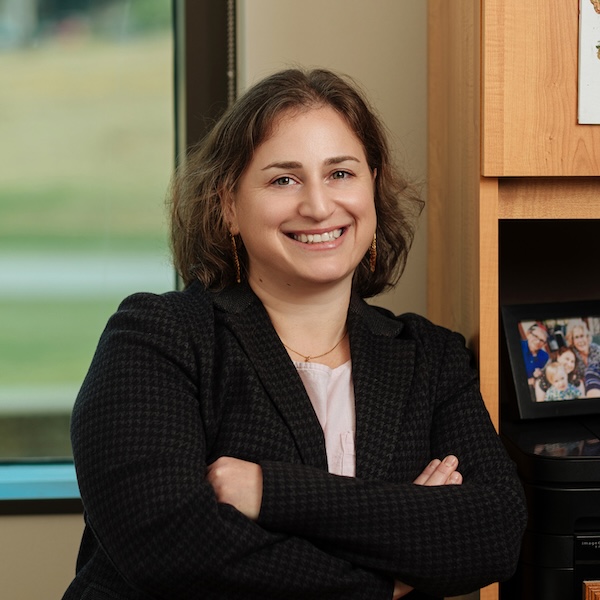
“We follow these offspring for their entire lives, from before birth to old age, and see a lot of changes that occur as a result of the mother’s diet,” said Texas Biomed Staff Scientist Hillary F. Huber, Ph.D.
“We follow these offspring for their entire lives, from before birth to old age, and see a lot of changes that occur as a result of the mother’s diet.”
Dr. Hillary Huber
The program was started and led by Peter Nathanielsz, M.D., Ph.D., until his retirement in 2022. An obstetrician, he spent his career studying developmental programming – the concept that the prenatal environment influences health throughout one’s entire life. The Dutch famine, when the Nazis blocked food supplies to part of The Netherlands during World War II, provided a real-world example of how severe undernourishment during pregnancy can lead to lifelong health impacts, including higher risk for type 2 diabetes and heart disease, reduced cognitive function, higher rates of breast cancer in females and increased anxiety and depression in males. Dr. Nathanielsz sought to understand the molecular mechanisms behind those observations, launching a program that would take years to set up and decades to see through.
Now in its 40th year, the program involves three lead institutes – Texas Biomed, UT Health San Antonio and Wake Forest University School of Medicine – along with more than 30 Ph.D. scientists and dozens of support staff, technical contributors and collaborators spanning the globe.

“This program is absolutely unique and it’s definitely Peter’s creativity, determination and ability to cobble together all kinds of funding over the years that have made this possible,” said Professor Laura Cox, Ph.D., who leads the Womb to Tomb program from Wake Forest University School of Medicine.
Unfortunately, the future of the program is at serious risk. The team is working hard to ensure it can continue through the final five years, but the drastic cuts to federal research budgets is putting that in question.
“Funding for the next five years has been delayed for months,” Dr. Cox said. “If federal funds are not provided, it is unlikely we’ll be able to achieve the overall goals of our program.”
Why baboons?
Dr. Huber along with SNPRC Director Corinna Ross, Ph.D., manage all aspects of the study’s baboons, which are cared for day in, day out by a large team of caretakers and veterinarians. Nonhuman primates are essential for this type of study. Not only would it be unethical to attempt with humans, it would not provide clear answers.
“Humans smoke, take other drugs, eat wildly different types of diets, exercise different amounts, live in places with different types of air pollution and different water quality, have different levels of education, different access to medical care and on and on and on,” Dr. Huber said. “It makes it very difficult to understand whether the differences you see between groups are because of what you’re trying to study or something else altogether.”
In contrast, baboons living together in the same environment, eating the same healthy amount of food, drinking from the same water sources, receiving the same enrichment and regular checkups, means that the only difference between them is what their mothers ate while pregnant. Study results can be traced back to that one variable.
Baboons were chosen because they are very similar to humans physically and metabolically. They develop the same diseases, including heart disease, obesity and diabetes. Importantly, their placentas are very similar in shape and structure to humans. The observations made at the molecular and cellular levels, while not a guarantee that they apply to humans, are strong indicators that can be followed up and confirmed in humans.
Too much vs. too little
To compare how a mother’s diet affects offspring, three groups were established: those whose mothers ate a healthy, nutritionally balanced diet during pregnancy and lactation, those whose mothers ate a diet too high in sugar and fat, and those whose mothers were undernourished by 30%, similar to a woman dieting during pregnancy. Once juveniles were weaned, they were all fed the same healthy diet, including fresh fruits and veggies.
The cohorts from healthy and undernourished mothers have lived out their lives, which typically span into their teens or 20s. The cohort from the overnourished mothers are about 11 years old now, the equivalent of a 44-year-old human.
“Our hypothesis was that both of those in utero stressors – over and under nourishment – would result in accelerated aging in the offspring,” Dr. Cox said. “But the interesting thing that we discovered in the first five years is that they age differently, it’s different in different tissues and there are sex differences.”
Broadly, they have found that undernutrition leads to numerous changes in offspring – they are more insulin resistant, have lower cognitive function and are more prone to obesity. They are also aging faster. As young adults, their hearts looked “really old,” on par with animals three times their age.
The data are still coming in for the overnutrition group as they move through adulthood and into old age over the next five years. But already there are some striking findings; most notably, their livers contained a lot of fat, even before birth.
“It’s really dramatic how much lipid they already have in their livers,” Dr. Cox said. “The baboon mothers are eating the equivalent of a Western diet. It’s not extreme. It’s no different than what the average American is eating, which is kind of scary.”

As the baboons have grown up, they still have high levels of fat in their livers, but surprisingly, this did not show up in routine blood work. The markers typically used in human medicine to assess liver health through a simple blood draw, including LDL, HDL, cholesterol and triglycerides, were all “normal.”
“We assume that those circulating measures are telling us what’s going on in the liver,” Dr. Cox said. “If you assume it is the same in people – and we don’t know that yet – but if it is, it could be misleading for individuals whose mothers ate a high fat, high sugar diet while pregnant.”
Hopeful indications
Who else is frustrated hearing this? What can be done if one’s own health course is set before birth?
Dr. Huber underscored that while certain risk factors increase, nothing is set in stone. In the same way that not every overweight person develops diabetes, not every baboon develops exactly the same way. And as the groups age, the researchers are seeing something fascinating.
For the undernutrition group, which showed signs of accelerated aging as youngsters, as they got older, their health metrics looked more like those of the control group. After spending a lifetime on a nutritionally balanced diet and running around in the sunshine in social groups, the negative impacts appear to normalize. The data are still being assessed – but there are hopeful indications.
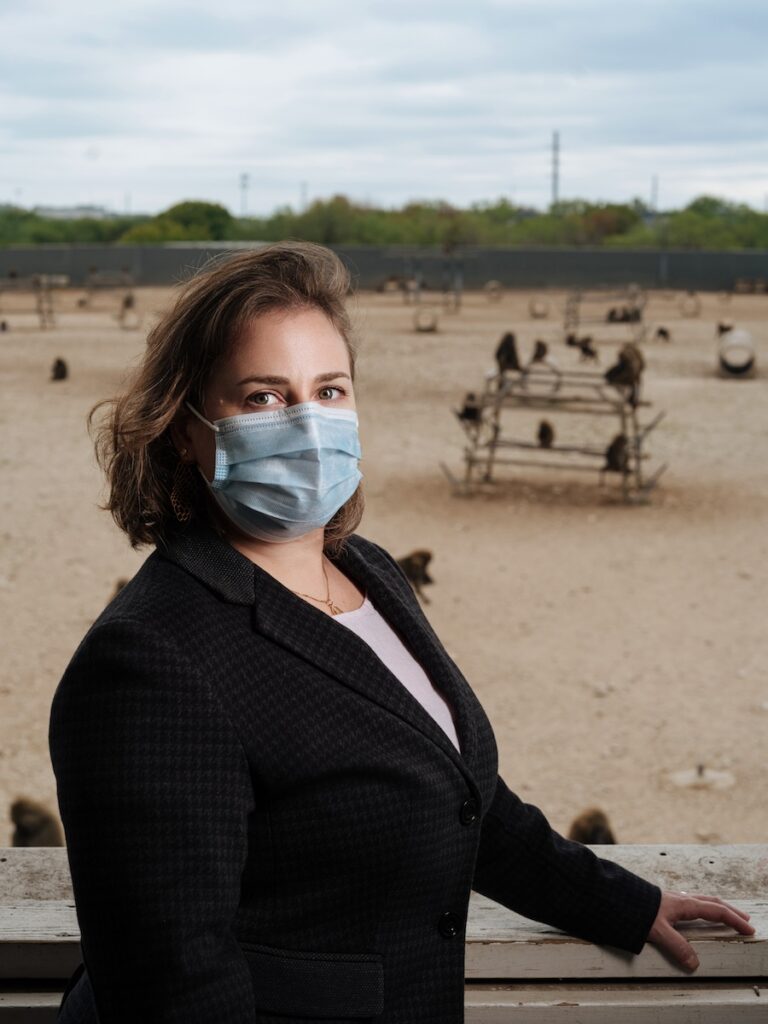
For the undernutrition group that showed signs of accelerated aging as youngsters, Dr. Huber has observed that after spending a lifetime on a nutritionally balanced diet and running around in the sunshine in social groups, the negative impacts appear to normalize.
“We saw all these changes early in life to the way their organs looked and functioned, but with a lifetime of healthy, ideal lifestyle, they seem to have gotten back to normal in old age,” Dr. Huber said. “We think this shows how lifestyle choices can make a positive impact on healthy aging.”
Long legacy

More than 100 studies from this program have been published in scientific journals to date and the research will continue long after the last baboon passes away. A key focus of the program has been ensuring the study continues to provide important insights. Tissues from the baboons have been carefully preserved with the help of Texas Biomed’s Pathology team. This vast archive will enable researchers around the world to extract new knowledge for decades to come.
Another lasting legacy of the Womb to Tomb program: the researchers themselves, who have trained and grown in their scientific careers and continue to do so. Dr. Cox began collaborating as an expert in molecular biology, genetics and cardiovascular disease in the early 2000s when she worked at SNPRC, gradually becoming more and more involved as a leader of the program. Dr. Huber was introduced to the project as a graduate student in 2011 and similarly became increasingly involved, crediting Dr. Nathanielsz’s mentorship.
“I didn’t think I would stay in research after graduate school, but I loved working with Peter because he was so supportive,” Dr. Huber said. “Mentorship is now formally baked into the DNA of this program – for each scientific unit, early career researchers are paired with senior researchers. To keep such a long-running project going, you need the next generation.”