BIOMED
BRIEFS
Particles of Ebola virus called virions (cyan) beginning to spread.
Credit: Jingjing Liang, Ronald N. Harty & PennVet Imaging Core
Potential targets for Ebola therapy identified
Understanding precisely how Ebola virus hijacks cells and uses them to replicate and spread is critical for developing effective interventions. Assistant Professor Olena Shtanko, Ph.D., and collaborators at University of Pennsylvania have determined how host cells either assist or block the virus. The finding, published in Nature Communications, involves the Hippo signaling pathway. Named after one of the key proteins involved, the Hippo pathway controls organism and tissue growth by regulating cell proliferation, differentiation, migration and death. Specifically, they identified enzymes in the pathway that bind to Ebola and help it spread, while another enzyme can block it.
“The Hippo pathway controls so many fundamental processes required for normal cell functioning that it would be highly unlikely for Ebola virus to avoid it,” said Dr. Shtanko. “We suspect that our findings may apply to a range of other viruses as well, such as Lassa virus, Sudan ebolavirus, Marburg virus and HIV.”
Genetic deep dive dispels fear of hybrid worm threat
Parasitic worms that infect humans are not interbreeding with those that infect cattle as previously thought. This is good news for when it comes to controlling schistosomiasis, a disease caused by these worms that affects more than 200 million people globally. For more than a decade, evidence suggested that the two species of parasites were trading genes frequently – a process called hybridization. This caused concern because it would significantly expand the potential for infection.
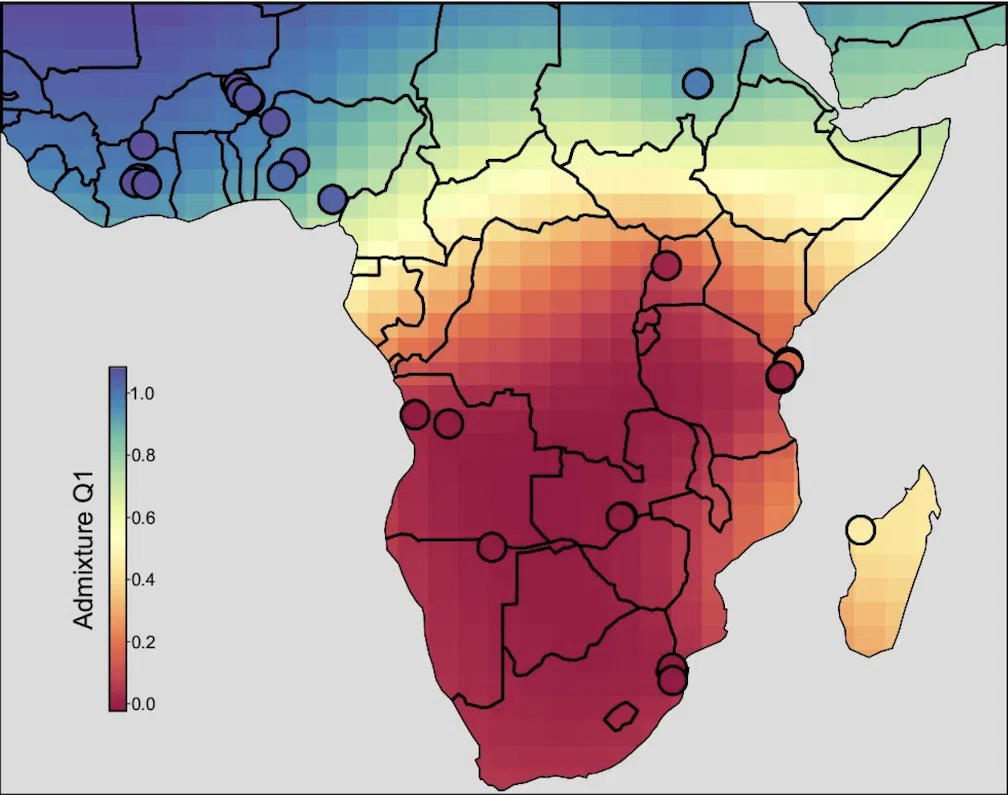
A detailed genetic analysis led by Staff Scientist Roy Neal Platt II, Ph.D., shows that the human parasite picked up genes from the cattle parasite a very long time ago, much like how humans still carry some Neanderthal DNA. The hybridization is not new or frequent and therefore does not pose a new threat for disease management.
“There have been 100 or more papers talking about rampant hybridization between these different species,” said Professor Tim Anderson, Ph.D. “This was one of the rare cases in my career where a member of my lab has written a paper that has completely changed the direction of a field.” The research was published in Nature Communications.
Promising TB therapy safe for patients with HIV
Tuberculosis (TB) can often become a deadly infection in immunocompromised individuals, such as those with HIV. Preclinical research at Texas Biomed demonstrated that a therapy showing promise to help control TB does not interfere with combined antiretroviral therapy (cART) for treating HIV. Professor Smriti Mehra, Ph.D., is investigating a therapy currently used in cancer as a potential treatment for patients with TB. Specifically, the host-directed therapy blocks a protein naturally found in the body, called IDO, preventing it from causing harmful inflammation and organ damage. Inhibiting IDO has been shown to improve control of TB. Ensuring the therapy does not interfere with cART was an essential step before evaluating combined treatment protocols for patients with both TB and HIV. The research was published in JCI Insight.
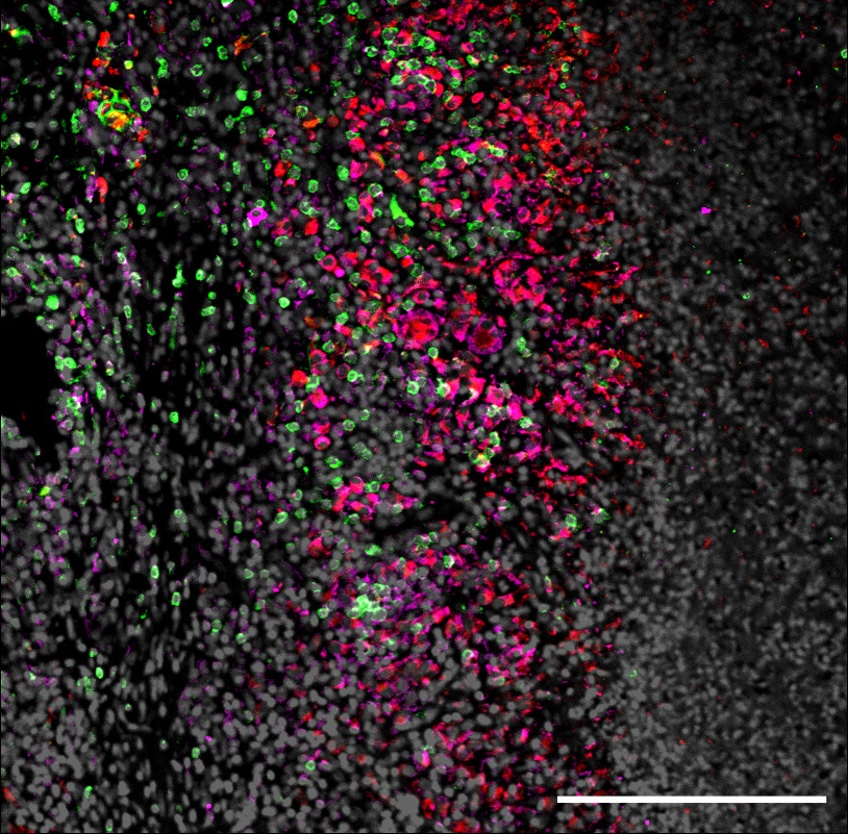
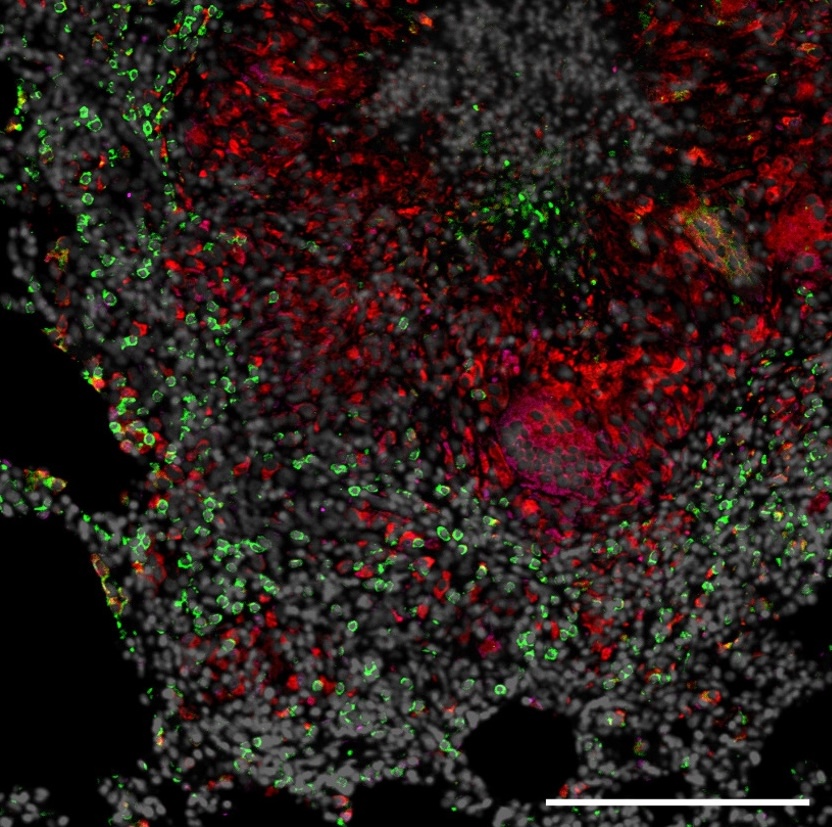
Comparing cART by itself versus cART and the IDO inhibitor in lung tissue of nonhuman primates with TB and simian immunodeficiency virus, the nonhuman primate version of HIV. Left/Top: Following just cART, significantly more IDO is detected in pink. Right/Bottom: With the IDO inhibitor and cART, immune cells recruited to fight bacteria are observed inside the granuloma, a hallmark structure of TB. Specifically, CD4+ T cells are in green and CD68 proteins expressed by macrophages are in red.